February 23, 2026
Vinyl Siding Installation: A Complete Guide for Homeowners
Vinyl siding remains the most popular exterior cladding material in the United States, and for good reason. It delivers a combination of durability, low maintenance, and curb appeal that other materials struggle to match at the same price point. Whether you are replacing aging aluminum panels, upgrading from wood clapboard, or selecting siding for new construction, understanding the vinyl siding installation process helps you make confident decisions and avoid costly mistakes.
At AVA Roofing & Siding, our team has installed vinyl siding on thousands of homes across Western New York since 2006. With four brothers leading the company and more than 60 years of combined industry experience, we have worked through every scenario that Buffalo’s weather and housing stock can produce. This guide shares the practical knowledge we have built across more than 6,000 completed exterior projects.
Why Homeowners Choose Vinyl Siding
Vinyl siding’s popularity is driven by a handful of practical advantages. First, it requires almost no maintenance beyond occasional cleaning. Unlike wood siding, which needs scraping, priming, and repainting every few years, vinyl retains its color and finish through decades of exposure to sun, rain, and snow. For Western New York homeowners dealing with heavy lake-effect snow, ice buildup, and temperature swings from below zero to the mid-eighties, that resilience matters.
Cost is another major factor. Vinyl siding installation typically falls between four and eight dollars per square foot for materials, with total installed costs varying based on home size, complexity, and the specific product profile chosen. Compared to fiber cement, engineered wood, or natural stone, vinyl delivers strong aesthetic results at a fraction of the investment.
Modern vinyl siding also offers far more design flexibility than many homeowners realize. Beyond traditional horizontal lap profiles, today’s options include board and batten, vinyl cedar shake, Dutch lap, and composite cladding systems that replicate the appearance of real wood grain without the upkeep. AVA carries products from CertainTeed, one of the industry’s leading manufacturers, giving our customers access to the widest range of colors, textures, and profiles available in the Buffalo market.
Types of Vinyl Siding Profiles
Traditional Horizontal Lap Siding
This is the classic vinyl siding profile that most people picture. Horizontal planks interlock from bottom to top, creating clean lines across the exterior. Traditional lap siding comes in various widths and exposure heights, with double four-inch and double five-inch profiles being the most common choices. It suits virtually any architectural style and pairs well with accent panels or trim elements.
Board and Batten Siding
Board and batten creates a vertical pattern using wide boards separated by narrow battens. This profile has seen a surge in popularity because it adds visual dimension and a more contemporary feel to home exteriors. Many homeowners use board and batten as an accent on gable ends, entryways, or dormers while running traditional horizontal siding across the main walls.
Vinyl Cedar Shake Siding
Cedar shake vinyl reproduces the rustic texture and staggered shadow lines of natural cedar shingles. It delivers the warmth of real wood without the splitting, cracking, and rot that natural cedar eventually develops. In the Buffalo area, where moisture levels stay high for much of the year and freeze-thaw cycles punish natural materials, vinyl cedar shake is an especially practical alternative.
Composite Cladding
Composite cladding systems represent the premium tier of vinyl-based siding. These products use denser materials and advanced manufacturing to achieve deeper wood-grain textures and richer color saturation. They typically carry longer warranties and offer enhanced impact resistance, making them worth considering for homeowners who want the absolute best aesthetic without committing to fiber cement or real wood maintenance.
The Vinyl Siding Installation Process
Step 1: Inspection and Preparation
Every professional vinyl siding installation begins with a thorough inspection of the existing exterior. Our project managers check for rotted sheathing, moisture damage behind the old siding, insulation gaps, and structural issues that need correction before new material goes up. Skipping this step is one of the most common mistakes in siding installation. If damaged sheathing or water intrusion problems get covered up by new siding, those issues will only get worse over time.
Step 2: Removal of Existing Siding
In most cases, the old siding must come off entirely before new vinyl goes on. While some contractors will install vinyl over existing siding to save time and reduce labor costs, this practice can trap moisture, hide underlying damage, and create an uneven surface that affects the finished appearance. At AVA Roofing & Siding, we perform full tear-offs on the vast majority of our projects to ensure a clean substrate and proper installation.
Step 3: Housewrap and Moisture Management
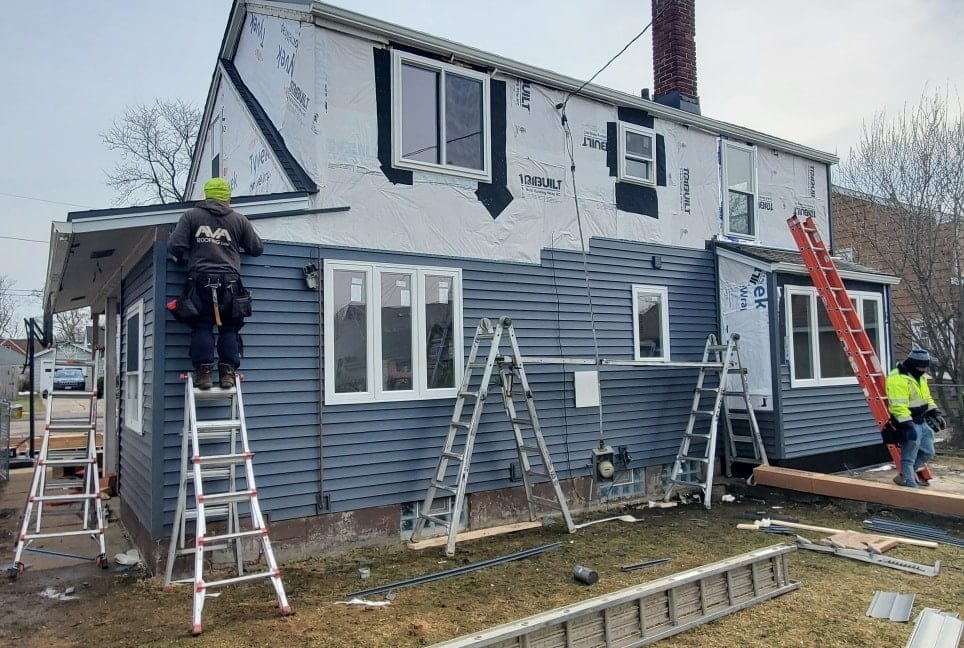
With the old siding removed and any sheathing repairs completed, the next step is installing a quality housewrap or weather-resistant barrier. This layer is critical for managing moisture. Housewrap allows water vapor to escape from inside the wall cavity while preventing wind-driven rain from penetrating into the structure. Proper overlapping, taping, and integration with window and door flashing ensures the barrier performs as designed.
Step 4: Installing Starter Strips, Trim, and Accessories
Before a single panel of siding goes up, the installation crew sets the foundation with starter strips along the bottom edge and J-channel or F-channel trim around windows, doors, soffits, and corners. Getting these components level, plumb, and properly spaced at this stage determines how straight and uniform the finished siding will look. Rushing through trim work is where many lower-quality installations go wrong.
Step 5: Panel Installation
Vinyl siding panels lock into the starter strip or the panel below and are nailed through slots in the nailing flange. The key technical detail here is that vinyl expands and contracts with temperature changes. Panels must be nailed loosely, centered in the nail slot, with approximately one-thirty-second of an inch of clearance. Driving nails tight or nailing off-center restricts movement and causes buckling, waviness, and panel failure, particularly during WNY’s extreme temperature swings.
Step 6: Final Details and Cleanup
With panels installed, the crew completes the project by fitting top courses under soffits, installing final trim pieces, and verifying that all joints, overlaps, and accessories are properly sealed and aligned. At AVA, our project managers conduct a final walkthrough with the homeowner to review every detail before considering the job complete. Our customers consistently note in reviews that cleanup is thorough and the site looks better after we leave than when we arrived.
How Much Does Vinyl Siding Installation Cost?
Total vinyl siding installation cost depends on several factors, including the size of the home, the number of stories, the complexity of the architecture, the specific product chosen, and the amount of prep work required. A straightforward ranch-style home will cost significantly less to side than a two-story colonial with multiple dormers, bay windows, and gable accents.
As a general guideline, homeowners in the Buffalo and Western New York area can expect total installed costs ranging from roughly eight thousand to twenty thousand dollars for an average-sized home. Premium products like composite cladding or extensive board and batten accent work will push costs toward the higher end of that range. The best way to get an accurate number is to schedule a no-obligation consultation where a project manager can assess your specific home and discuss options.
AVA Roofing & Siding also offers 0% financing options, making it possible to upgrade your home’s exterior without a large upfront payment. Our team walks you through available programs during the consultation process so you can find a payment structure that works for your budget.
Choosing the Right Siding Contractor
The quality of a vinyl siding installation depends as much on the installer as it does on the materials. Even premium siding products will fail prematurely if installation is done incorrectly. When evaluating contractors, look for a company that is fully bonded, licensed, and insured. Ask about their experience with the specific products you are considering and whether they perform full tear-offs or install over existing siding.
Check online reviews across multiple platforms. A company with hundreds of verified reviews across Google, HomeAdvisor, and the Better Business Bureau is a safer bet than one with a handful of reviews on a single site. AVA Roofing & Siding has earned more than 800 verified reviews across platforms, maintains a 4.9 rating on HomeAdvisor, an A+ BBB rating, and has been recognized as a Nextdoor Neighborhood Favorite three years running.
Finally, ask about warranties. A reputable contractor will stand behind their workmanship with a warranty in addition to the manufacturer’s product warranty. This dual coverage protects you against both material defects and installation errors.
Common Vinyl Siding Installation Mistakes to Avoid
Even when working with quality materials, certain installation errors can compromise the finished product. Nailing panels too tightly is the most frequent mistake, causing buckling when temperatures rise. Failing to leave expansion gaps at trim channels is another common issue. Panels that are pushed fully into J-channel without clearance will buckle or pop out as they expand.
Improper overlapping at panel joints creates visible seams that detract from the home’s appearance and can allow moisture infiltration. Panels should always overlap in a direction that faces away from the most common line of sight from the street. Neglecting proper flashing around windows and doors is perhaps the most consequential error, as it allows water to enter the wall cavity and cause structural damage over time.
Frequently Asked Questions About Vinyl Siding Installation
For an average-sized home in the Buffalo area, most vinyl siding installations take between three and five days, depending on the home’s size, complexity, and how much prep work is needed. Multi-story homes with extensive trim work or significant sheathing repairs may take longer. Our project managers provide a timeline estimate during the initial consultation.
Vinyl siding can be installed in cold weather, but extra care is required. Cold vinyl becomes more brittle and can crack if handled roughly or forced into position. Experienced installers adjust their techniques in cold conditions and may pre-cut panels indoors to reduce the risk of cracking. In Western New York, we install siding in temperatures well below freezing when necessary, but spring and fall are the ideal seasons for the project.
Yes, vinyl siding replacement consistently ranks among the top home improvement projects for return on investment. According to industry cost-versus-value reports, vinyl siding replacement typically recoups sixty to seventy percent of its cost at resale. Beyond the financial return, updated siding dramatically improves curb appeal, which makes a home more attractive to buyers and can reduce time on the market.
Quality vinyl siding installed correctly will last between 20 and 40 years, with many premium products carrying lifetime limited warranties. The actual lifespan depends on the product quality, installation workmanship, sun exposure, and weather conditions. Western New York’s climate is demanding, but properly installed vinyl holds up well against our snow, ice, and temperature extremes.
In most cases, yes. Removing old siding allows the installer to inspect the sheathing for rot, moisture damage, and structural issues. It also creates a flat surface for the new siding, resulting in a better-looking finished product. Installing over old siding can trap moisture and hide problems. AVA Roofing & Siding performs full tear-offs on the majority of our siding projects to ensure the best possible results.
The best vinyl siding for Buffalo-area homes is a product rated for high wind resistance and engineered for significant temperature variation. CertainTeed’s product line offers excellent options for our climate, with profiles designed to handle freeze-thaw cycling without warping or cracking. Thicker gauge panels in the 0.044 to 0.046 inch range provide better impact resistance against hail and debris. Our team helps customers select the right product based on their home’s specific exposure and budget.
Ready to upgrade your home’s exterior with quality vinyl siding? Contact AVA Roofing & Siding at 716-343-7663 or schedule your free, no-obligation consultation online. We’ll help you find the perfect siding solution for your home and budget.