

February 23, 2026
Commercial Roofing Maintenance: How to Protect Your Business Investment
A commercial roof is one of the most valuable and most neglected assets in any building. While residential homeowners tend to notice roof problems quickly because they live directly beneath the surface, commercial building owners and property managers often overlook their roof until a leak disrupts operations, damages inventory, or triggers a tenant complaint. By that point, what could have been a minor maintenance item has often become an expensive repair or a premature replacement.
Commercial roofing maintenance is not just about fixing problems after they appear. It is a structured, preventive approach that extends the lifespan of your roof, reduces lifetime costs, and ensures your building stays watertight through every season. AVA Roofing & Siding has maintained commercial roofs across Western New York since 2006, and our team has seen firsthand how the difference between a maintained roof and a neglected one translates into tens of thousands of dollars over a building’s life.
Why Commercial Roofing Maintenance Matters
The average commercial roof replacement costs between five and twelve dollars per square foot, depending on the system and building size. For a 10,000-square-foot flat roof, that translates to a replacement cost of fifty thousand to one hundred twenty thousand dollars. A well-maintained commercial roof can last 25 to 30 years or more. A neglected one may fail in 12 to 15 years, cutting its useful life nearly in half.
Beyond the direct cost of premature replacement, neglected commercial roofs create secondary problems. Water intrusion damages insulation, electrical systems, and interior finishes. Mold growth creates health hazards and potential liability. Energy costs rise as degraded insulation and membrane breaches allow conditioned air to escape. And for businesses that lease space, roof problems can violate lease obligations and drive tenants away.
Proactive maintenance addresses small issues, such as membrane punctures, flashing separations, and drain blockages, before they compound into system-wide failures. It is one of the highest-return investments a commercial property owner can make.
Types of Commercial Roofing Systems
EPDM (Rubber) Roofing
EPDM is a synthetic rubber membrane widely used on low-slope commercial buildings. It is valued for its durability, flexibility, and ease of repair. EPDM roofs are particularly common in the Buffalo area because the membrane remains flexible in extreme cold, making it resistant to cracking during harsh WNY winters. Maintenance for EPDM roofs focuses on seam integrity, flashing adhesion, and surface condition.
TPO Roofing
Thermoplastic Polyolefin, or TPO, is a single-ply membrane that has gained popularity for its energy efficiency and heat-welded seams. The white surface reflects sunlight, reducing cooling costs in summer. TPO’s heat-welded seams create a stronger bond than the adhesive-based seams used in EPDM, which can reduce long-term maintenance needs. However, TPO membranes are thinner than EPDM and can be more susceptible to puncture damage from foot traffic or debris.
Modified Bitumen
Modified bitumen is an asphalt-based system applied in layers, often with a granulated cap sheet that provides UV protection and additional waterproofing. It is a proven system for WNY’s climate because it handles thermal cycling well and offers excellent waterproofing redundancy. Maintenance involves monitoring the cap sheet for granule loss, checking seams and flashings, and ensuring that any blistering or ridging is addressed before it progresses.
Roof Coatings
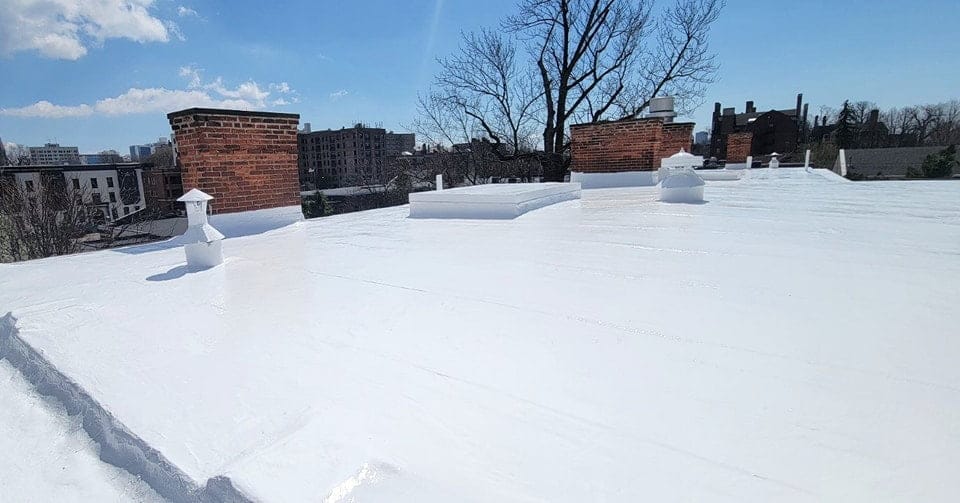
Roof coatings are liquid-applied membranes that can be used over existing roofing systems to extend their life. Silicone, acrylic, and polyurethane coatings each offer different advantages depending on the existing substrate and the building’s specific needs. A quality coating application can add 10 to 15 years of service life to a commercial roof that still has sound structural integrity but is approaching the end of its warranty period.
Commercial Roof Maintenance Schedule
Biannual Inspections
At minimum, commercial roofs should receive a professional inspection twice per year: once in the spring after winter weather has subsided, and once in the fall before the next winter cycle begins. In Western New York, where lake-effect snow dumps can deposit enormous loads on flat roofs and ice dam formation is a constant threat, these seasonal checkpoints are essential.
Spring inspections focus on identifying damage from winter, including membrane splits caused by ice movement, flashing separations from freeze-thaw cycling, and drain blockages from accumulated debris. Fall inspections verify that the roof is prepared to handle the coming winter, with all drains clear, flashings sealed, and any vulnerable areas reinforced.
Post-Storm Inspections
Western New York experiences severe thunderstorms, high winds, hail, and heavy snow events that can cause immediate roof damage. After any significant weather event, a visual inspection should be performed to identify punctures, membrane tears, displaced flashing, or structural concerns from excessive snow or ice loading. Catching storm damage early prevents water intrusion from compounding the initial damage.
Ongoing Maintenance Tasks
Between formal inspections, building owners and maintenance staff should keep rooftop drains, gutters, and scuppers clear of leaves, debris, and ice. Standing water on a commercial roof, called ponding, accelerates membrane degradation and increases structural load. Trim any overhanging tree branches that could scratch the membrane surface or deposit debris. And report any signs of interior water staining or moisture to your roofing contractor immediately, as these indicate an active leak that needs prompt attention.
Common Commercial Roof Problems in Western New York
Ice Dam and Snow Load Issues
Buffalo and the surrounding region receive some of the heaviest snowfall in the eastern United States. Flat and low-slope commercial roofs are particularly vulnerable because snow accumulates evenly rather than shedding naturally. Excessive snow loads can stress the structure, and ice dams at drainage points can cause water to back up beneath the membrane. Regular snow removal from commercial roofs, performed by trained crews who understand how to work on membrane surfaces without causing damage, is a critical part of winter maintenance in this region.
Membrane Punctures and Tears
HVAC technicians, maintenance workers, and other tradespeople regularly access commercial rooftops to service equipment. Without designated walkways or protective pads around equipment, foot traffic can puncture or wear through the membrane. Even dropped tools or fasteners from adjacent work can create holes that compromise the roof’s waterproofing. Establishing access protocols and installing walk pads around high-traffic areas significantly reduces this type of damage.
Flashing Failures
Flashings are the metal or membrane components that seal transitions between the roof surface and walls, curbs, penetrations, and edges. These transition points experience the most movement from thermal expansion and contraction, making them the most common failure points on any commercial roof. In WNY’s climate, where temperature swings of 30 or 40 degrees can happen in a single day during spring and fall, flashing integrity is especially important to monitor.
When to Repair vs. Replace a Commercial Roof
Not every problem requires a full roof replacement. Isolated punctures, localized flashing failures, and minor seam separations can be repaired cost-effectively if the overall membrane is still in good condition. The key question is whether the problems are isolated incidents or symptoms of system-wide deterioration.
If a roof is experiencing widespread membrane degradation, multiple active leaks in different areas, persistent ponding that does not resolve with drain maintenance, or saturated insulation that has lost its thermal value, replacement is typically the more cost-effective long-term decision. Continuing to patch a failing system becomes a cycle of increasing repair costs with diminishing returns.
A roofing contractor experienced with commercial systems can perform a comprehensive assessment that includes core samples to evaluate insulation condition, infrared scanning to detect moisture beneath the surface, and a cost analysis comparing ongoing repair expenses against replacement investment. AVA Roofing & Siding provides these assessments for commercial building owners across the Buffalo region.
Frequently Asked Questions About Commercial Roofing Maintenance
Commercial roofs should be professionally inspected at least twice per year, ideally in spring and fall. Additional inspections should be performed after significant storms, heavy snowfall, or any event that could cause damage. Buildings with heavy rooftop equipment or frequent maintenance access may benefit from quarterly inspections.
A thorough commercial roof inspection covers the membrane surface condition, all flashings and seams, drainage systems including drains and scuppers, rooftop penetrations such as HVAC curbs and vent pipes, the condition of any roof coatings, and signs of interior water intrusion. The inspector should provide a written report with photographs documenting current conditions and recommended actions.
Annual commercial roof maintenance programs typically cost between one to three percent of the roof’s replacement value. For a roof with a one hundred thousand dollar replacement cost, that translates to roughly one to three thousand dollars per year. This investment consistently saves building owners many times its cost by preventing premature replacement and avoiding emergency repair premiums.
Yes, many commercial roof repairs can be performed in winter, though some materials and methods work better in cold conditions than others. EPDM repairs using mechanical fastening or cold-applied adhesives can be done in below-freezing temperatures. Hot-applied products and some coatings require warmer conditions. An experienced commercial roofing contractor will recommend the right approach based on the specific issue and current weather conditions.
The lifespan of a commercial roof depends on the system type and how well it is maintained. EPDM roofs typically last 20 to 30 years, TPO systems last 15 to 25 years, and modified bitumen can last 20 to 30 years. Roof coatings can extend an existing system’s life by 10 to 15 years. Consistent maintenance is the single biggest factor in whether a roof reaches the upper or lower end of its expected lifespan.
Yes, AVA Roofing & Siding provides commercial roofing maintenance services for businesses across Western New York. Our team works with EPDM, TPO, modified bitumen, and coating systems. We offer inspection programs, preventive maintenance plans, and emergency repair services. Contact us at 716-343-7663 to discuss a maintenance plan tailored to your building.
Protect your commercial investment with proactive roof maintenance. Contact AVA Roofing & Siding at 716-343-7663 or visit avaroofing.com to schedule a commercial roof inspection. Our experienced team serves businesses throughout the Buffalo and Western New York region.
