February 23, 2026
Signs You Need a New Roof: What Every Homeowner Should Watch For
No homeowner wants to hear that they need a new roof. It is one of the largest single investments you will make in your home, and it is not the kind of project that delivers the immediate satisfaction of a kitchen remodel or a finished basement. But ignoring the signs that your roof is failing puts everything underneath it at risk. Water damage from a deteriorating roof can destroy insulation, damage electrical systems, ruin drywall and ceilings, and create mold problems that cost far more to remediate than the roof replacement itself would have.
The good news is that roofs rarely fail without warning. There are clear, visible indicators that your roof is approaching the end of its useful life, and recognizing them early gives you time to plan and budget for replacement rather than scrambling through an emergency. AVA Roofing & Siding has replaced over 6,000 roofs across Western New York since 2006. Here are the warning signs our team sees most frequently when evaluating roofs for Buffalo-area homeowners.
Your Roof Is Over 20 Years Old
The age of your roof is the most straightforward indicator of its remaining life. Standard three-tab asphalt shingles have an expected lifespan of 15 to 20 years. Architectural shingles typically last 25 to 30 years, and premium products can approach 40 years under ideal conditions. However, Western New York’s climate is far from ideal for roofing. Heavy snow loads, ice dam formation, extreme temperature cycling, and high winds all accelerate wear and can shorten these expected lifespans by several years.
If you do not know when your roof was last replaced, your local building department may have permit records that show the date of the last roofing project. You can also check any home inspection reports from when you purchased the property.
Shingles Are Curling or Buckling
Curling shingles are one of the most visible signs of roof deterioration. There are two types of curling to watch for. Cupping occurs when the edges of the shingle turn upward while the center remains flat. Clawing is when the center rises and the edges stay flat. Both indicate that the shingle material has degraded from age, heat exposure, or moisture cycling to the point where it can no longer lie flat against the roof deck.
Curled shingles are vulnerable to wind uplift and no longer shed water effectively. Even moderate wind can catch a curled edge and tear the shingle away entirely. In the Buffalo area, where wind gusts regularly exceed 40 miles per hour during storm events, curled shingles are essentially waiting to fail.
Significant Granule Loss
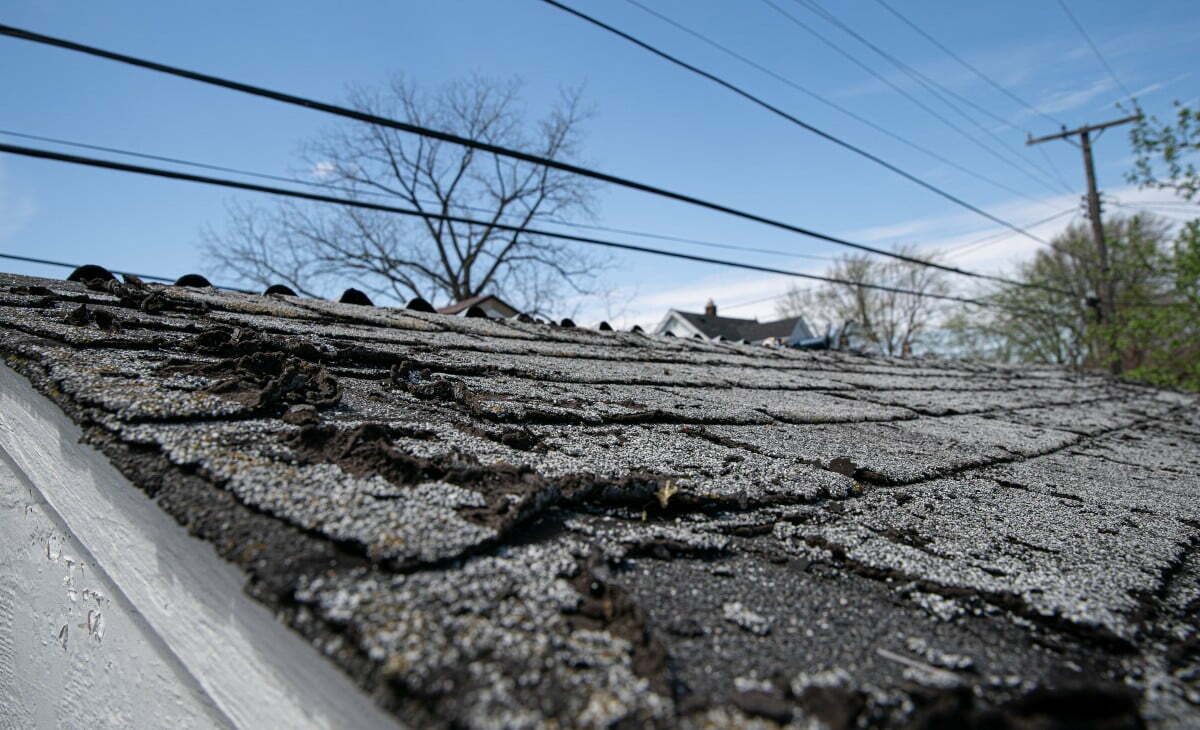
Asphalt shingles are coated with ceramic granules that protect the underlying asphalt from UV radiation and provide the first line of waterproofing. It is normal for new shingles to shed a small amount of excess granules in the first year or two after installation. However, if you notice heavy granule accumulation in your gutters and downspouts, or you can see bare, dark patches on the shingle surface where granules have worn away, the shingles are reaching the end of their protective capability.
Without their granule layer, shingles deteriorate rapidly under sun exposure. The asphalt dries out, becomes brittle, and cracks. In WNY’s climate, where roofs experience wide temperature swings that cause expansion and contraction, brittle shingles crack and fail much faster than those with an intact granule surface.
Missing Shingles
A few missing shingles after a severe storm does not necessarily mean you need a full replacement. Isolated wind damage can often be repaired by replacing the missing shingles. However, if shingles are going missing regularly, or if you are finding shingles in your yard after moderate wind events that would not have affected them when new, the roofing system has weakened to the point where repairs are only buying time.
Missing shingles also expose the underlayment and decking to direct weather exposure, which accelerates deterioration of the layers beneath. Each storm that hits an exposed area causes compounding damage.
Daylight Visible Through the Roof Deck
If you can see daylight coming through the roof boards from inside your attic, the roof has a serious breach. This could be from missing shingles, rotted decking, or structural damage. Any point where daylight enters is also a point where water enters, and water damage may have already begun in areas you cannot easily see. If you notice light coming through your attic roof deck, schedule a professional inspection immediately rather than waiting for a leak to confirm the problem.
Sagging Areas on the Roof
A roof should present a straight, even plane from ridge to eave. Visible dips, sags, or waves in the roofline indicate that the structural support beneath the shingles has been compromised. This can result from prolonged water damage to the decking, failed structural members, excessive snow loading over many seasons, or original construction defects that have worsened with age.
Sagging is one of the most serious warning signs because it involves the structural integrity of the roof, not just the surface material. A sagging roof may require not only new shingles but also decking replacement and structural reinforcement.
Interior Water Stains or Active Leaks
Brown or yellowish stains on your ceilings or upper walls are evidence that water has found a path from the roof into your living space. The stain may be some distance from the actual leak, because water travels along rafters and sheathing before dripping to the ceiling below. Active dripping during rain or snowmelt is a more urgent version of the same problem.
While a single leak can sometimes be addressed with a targeted repair, multiple leaks in different areas of the home suggest that the roofing system has reached a point of widespread failure where replacement is the more cost-effective solution.
Rising Energy Bills
If your heating or cooling costs have increased noticeably without a corresponding change in usage, your roof may be part of the problem. A deteriorating roof allows conditioned air to escape through gaps, compromised flashing, and degraded underlayment. In Buffalo’s cold winters, heat loss through a failing roof forces your furnace to work harder and longer, driving up energy costs. A new roof with proper insulation and ventilation can produce a noticeable reduction in energy expenses.
Moss and Algae Growth
Moss growing on your roof is more than a cosmetic concern. Moss roots can work their way under shingle edges, lifting them and creating pathways for water infiltration. Dense moss growth also holds moisture against the shingle surface, accelerating deterioration. In Western New York’s humid climate, moss grows readily on shaded roof surfaces, particularly north-facing slopes and areas shaded by mature trees.
While moss can be treated with soft washing on a roof that is otherwise in good condition, extensive moss growth on an aging roof often indicates that the shingles are nearing the end of their useful life and the moss is accelerating an already progressing decline.
Damaged or Missing Flashing
Flashing is the metal material installed at transition points on the roof, including around chimneys, vent pipes, skylights, and where the roof meets a wall. Properly installed flashing directs water away from these vulnerable junctions. When flashing corrodes, separates, or goes missing, these areas become primary leak points.
Older homes in the Buffalo area sometimes have flashing made from galvanized steel that has corroded over decades of exposure to moisture and road salt air. If your flashing is showing signs of rust, separation, or physical damage, it needs to be addressed, and if the roof is also aging, combining flashing replacement with a full reroof is the most efficient approach.
Your Neighbors Are Replacing Their Roofs
Homes in the same neighborhood are typically built around the same time period and experience the same weather conditions. If several of your neighbors are getting new roofs, and your home was built in the same era, your roof is likely approaching the same age-related issues. This is not a definitive indicator on its own, but it is a practical prompt to have your own roof assessed. It may also present an opportunity to negotiate better pricing, as roofing crews working in a neighborhood can sometimes offer savings on adjacent projects.
What to Do If You See These Signs
If you are noticing one or more of these warning signs, the best next step is to schedule a professional roof inspection. A qualified roofing contractor can assess the overall condition of your roof, identify the specific issues, and provide an honest recommendation on whether repair, maintenance, or replacement is the right path forward.
At AVA Roofing & Siding, our project managers provide free, no-obligation roof inspections for homeowners throughout the Buffalo and Western New York region. We document our findings with photos, explain your options clearly, and provide detailed written estimates. We also work directly with insurance companies on storm damage claims and offer 0% financing options to make roof replacement manageable for your budget.
Frequently Asked Questions About Roof Replacement
Most residential roof replacements are completed in one to two days, depending on the size and complexity of the roof. A straightforward single-layer tear-off and reshingle on an average-sized home is typically a one-day project. Multi-layer tear-offs, extensive decking repairs, or complex roof geometries may extend the project to two or three days.
Roof replacement costs in the Buffalo area vary based on roof size, material selection, complexity, and the amount of repair work needed. For an average-sized home, full roof replacement with architectural shingles typically ranges from eight thousand to eighteen thousand dollars. Premium materials, extensive decking replacement, or complex roof designs will increase the cost. AVA Roofing & Siding provides free detailed estimates and offers financing options.
In some cases, a second layer of shingles can be installed over the existing layer. However, this is generally not recommended. Overlaying hides potential decking damage, adds weight to the structure, can void shingle warranties, and typically shortens the new roof’s lifespan. AVA Roofing & Siding performs full tear-offs on most projects to ensure the best long-term result.
In Western New York, late spring through early fall provides the best conditions for roof replacement. Shingles seal properly in warmer temperatures, and the longer days allow crews to maximize productivity. However, roof replacement can be done year-round when needed. If your roof has active leaks or serious damage, waiting for ideal weather can cause additional and more expensive damage.
Yes, a new roof consistently ranks among the top home improvement projects for return on investment. Industry data shows that a new roof typically recoups sixty to seventy percent of its cost at resale. Beyond the direct financial return, a new roof eliminates a major concern for buyers, often speeds up the sale process, and can reduce insurance premiums.
Look for a contractor that is fully licensed, bonded, and insured with verifiable credentials. Check reviews across multiple platforms including Google, BBB, and HomeAdvisor. Ask about their experience with your specific roof type and the materials you are considering. Get a detailed written estimate and ask about workmanship warranties in addition to manufacturer product warranties. AVA Roofing & Siding has an A+ BBB rating, over 800 verified reviews, and more than 60 years of combined team experience.
Think your roof might be telling you something? Contact AVA Roofing & Siding at 716-343-7663 for a free, no-obligation roof inspection. Our team will give you an honest assessment and help you plan your next steps with confidence.