February 23, 2026
Should You Power Wash Your Roof? What Every Homeowner Needs to Know
Dark streaks running down your roof, patches of green moss creeping across the shingles, or a general dingy appearance can make even a relatively new roof look old and neglected. The instinct to grab a pressure washer or call a power washing company is understandable. After all, pressure washing works wonders on driveways, siding, and decks. But using a pressure washer on your roof is one of the most damaging things you can do to your home’s most critical protective system.
AVA Roofing & Siding has replaced and repaired thousands of roofs across Western New York since 2006. We have seen firsthand the damage that power washing causes to asphalt shingles, and we regularly encounter homeowners who unknowingly shortened their roof’s lifespan by years through a single pressure washing session. This guide explains why power washing your roof is a bad idea, what those dark stains actually are, and what you should do instead.
Why Power Washing Damages Your Roof
It Strips Protective Granules
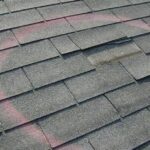
Asphalt shingles are surfaced with ceramic granules that serve two essential functions. They protect the underlying asphalt from ultraviolet radiation, and they provide the first layer of waterproofing on the shingle surface. A pressure washer operating at 1,500 to 3,000 PSI, which is the standard range for residential power washing equipment, blasts these granules off the shingle surface. Once those granules are gone, the exposed asphalt deteriorates rapidly under UV exposure, dramatically shortening the roof’s remaining life.
It Forces Water Under Shingles
Asphalt shingles are designed to shed water that flows downward across their surface. They are not designed to resist water forced upward or sideways under high pressure. A pressure washer can drive water underneath shingle tabs, past the nail line, and into the roof deck and underlayment. This water intrusion causes rot in the decking, mold growth in the attic, and can damage insulation and ceilings inside the home. In many cases, the homeowner does not discover this damage until months later when stains appear on interior ceilings.
It Can Void Your Warranty
Most asphalt shingle manufacturers, including CertainTeed, Owens Corning, GAF, and Atlas, explicitly state in their warranty documents that pressure washing or power washing voids the product warranty. This means that if you pressure wash your roof and later experience a shingle failure, the manufacturer is not obligated to cover the replacement cost, even if the shingles were well within their expected lifespan. Given that a full roof replacement in Western New York costs anywhere from eight thousand to twenty thousand dollars or more, voiding your warranty over a cleaning attempt is an expensive mistake.
It Damages Flashing and Sealants
High-pressure water can peel back the caulking and sealant around roof penetrations, chimney flashings, vent pipes, and skylights. These sealants are what keeps water from entering the building at the most vulnerable transition points on the roof. Compromising them creates leak paths that may not become apparent until the next heavy rain or snowmelt, when water enters the building interior.
What Are Those Dark Streaks on Your Roof?
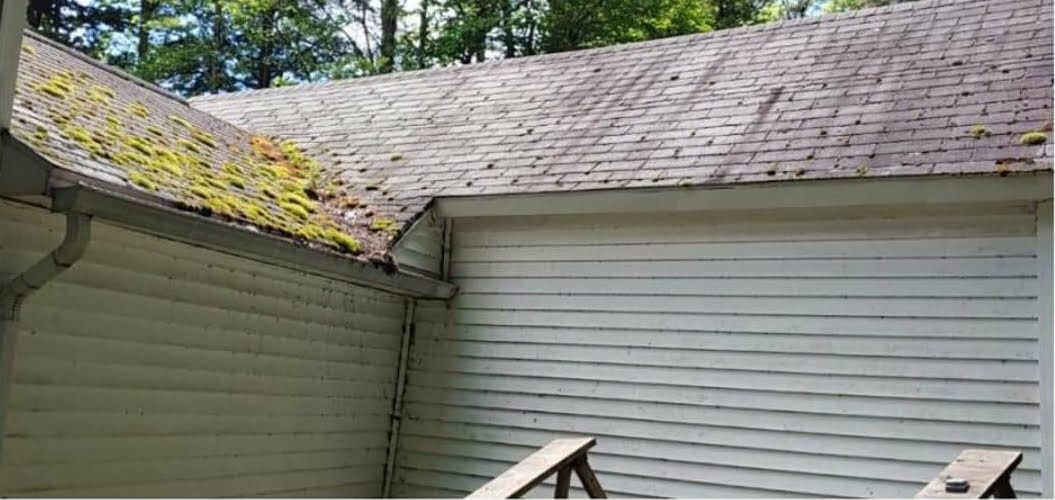
The dark streaks that make your roof look dirty are almost always caused by a blue-green algae called Gloeocapsa magma. This organism feeds on the limestone filler used in asphalt shingles. It is not damaging the shingles in the short term, but it does create an unsightly appearance that makes your home look older and less maintained than it actually is. Gloeocapsa magma thrives in humid environments and on roof surfaces that receive limited direct sunlight, which is why north-facing roof slopes typically show the worst staining.
Moss is a different issue. While algae is primarily cosmetic, moss growth can actually damage shingles by lifting the edges, holding moisture against the surface, and creating gaps where water enters the roof system. In Western New York’s moist climate, moss growth is common on shaded roof areas, particularly on homes surrounded by mature trees.
Safe Alternatives to Power Washing Your Roof
Soft Washing
Soft washing is the industry-recommended method for cleaning asphalt shingle roofs. It uses a low-pressure spray, typically around 60 to 100 PSI, combined with a cleaning solution formulated to kill algae and moss without damaging the shingles. The most common cleaning solution is a mixture of sodium hypochlorite, commonly known as bleach, and water, applied at a concentration recommended by shingle manufacturers. The solution is applied, allowed to dwell on the surface to kill the organisms, and then gently rinsed off with low-pressure water.
Soft washing effectively removes algae staining and kills moss without stripping granules, forcing water under shingles, or voiding warranties. Most manufacturer-approved roof cleaning guidelines specifically recommend soft washing or low-pressure chemical treatment as the only acceptable cleaning method.
Algae-Resistant Shingles
If you are planning a roof replacement, consider specifying algae-resistant shingles. These products incorporate copper granules into the shingle surface that inhibit algae growth. While they cost slightly more than standard shingles, they maintain a cleaner appearance for significantly longer, reducing or eliminating the need for roof cleaning altogether. AVA Roofing & Siding installs algae-resistant shingles from CertainTeed, Owens Corning, and Atlas for homeowners who want long-term stain prevention.
Zinc or Copper Strips
Installing zinc or copper strips along the roof ridge is a low-cost preventive measure that inhibits algae and moss growth. When rainwater flows over these metal strips, it carries trace amounts of zinc or copper down the roof surface, creating an environment that discourages organic growth. This is not a quick fix for existing stains, but it is an effective long-term prevention strategy that can be installed during a roof replacement or as a standalone addition.
Tree Trimming
Reducing shade on the roof by trimming back overhanging tree branches allows more sunlight and air circulation to reach the shingle surface. Algae and moss require moisture and shade to thrive, so increasing sun exposure is one of the most effective natural deterrents. Trimming also reduces the amount of leaf debris that accumulates on the roof and in gutters, improving drainage and reducing moisture retention.
When Roof Staining Indicates a Bigger Problem
In most cases, dark staining on a roof is cosmetic and does not indicate structural issues. However, there are situations where discoloration signals a more serious problem. If you see staining concentrated around a specific area like a chimney, vent pipe, or valley, it may indicate a flashing failure or chronic water intrusion rather than simple algae growth. If the staining is accompanied by sagging, soft spots, or interior water stains, the underlying decking may be compromised.
Before investing in roof cleaning, it is worth having a professional roofer inspect the surface to distinguish between cosmetic algae staining and discoloration caused by water damage or material failure. At AVA Roofing & Siding, our project managers provide free roof assessments that identify whether the issue is cosmetic, maintenance-related, or an indication that repair or replacement is needed.
Frequently Asked Questions About Power Washing Roofs
In most cases, yes. Major shingle manufacturers including CertainTeed, Owens Corning, GAF, and Atlas include language in their warranties that specifically excludes damage caused by pressure washing. If you pressure wash your roof and later file a warranty claim, the manufacturer can deny coverage. Always check your warranty documentation before allowing any cleaning method to be used on your roof.
Metal roofing is more resistant to pressure washing than asphalt shingles, but caution is still warranted. High pressure can dent thin metal panels, strip paint finishes, and damage sealants at seams and penetrations. If your metal roof needs cleaning, a low-pressure wash with appropriate cleaning solutions is the safer approach.
Most roofs do not need regular cleaning unless algae or moss growth is affecting appearance. If your roof is prone to staining, soft washing every three to five years is typically sufficient to maintain appearance. Installing algae-resistant shingles or zinc strips during your next roof replacement can reduce or eliminate the need for cleaning altogether.
The dark streaks on your roof are almost certainly Gloeocapsa magma, a type of blue-green algae that feeds on the limestone in asphalt shingles. It is cosmetic rather than structural, but it does make your roof look aged and dirty. The algae spreads through airborne spores, which is why you often see the same staining pattern on neighboring homes.
Walking on a roof carries real risks, including falls, slipping on algae or moss-covered surfaces, and damaging shingles under foot traffic. Roof cleaning is best left to professionals who have the safety equipment, training, and experience to work on elevated surfaces without causing injury or damage. If you notice roof staining, contact a professional rather than attempting to clean it yourself.
Professional soft washing for an average-sized residential roof typically costs between three hundred and six hundred dollars, depending on the roof’s size, pitch, and the severity of the staining. This is a fraction of the cost of replacing a roof that has been damaged by improper pressure washing. Always verify that the cleaning company uses soft washing methods specifically approved for asphalt shingle roofs.
Concerned about the appearance of your roof? Contact AVA Roofing & Siding at 716-343-7663 for a free roof assessment. We’ll determine whether your roof needs cleaning, maintenance, or replacement and recommend the right solution for your situation.