Emergency Roof Snow Removal: When Snow Load Becomes a Structural Risk
Buffalo and Western New York consistently rank among the snowiest metropolitan areas in the United States, averaging over 95 inches of snowfall per year. Lake-effect storms routinely deliver 2 to 3 feet of snow in 24 to 48 hours, and back-to-back events can leave roofs buried under loads that far exceed what they were designed to carry.
Most homeowners think of snow removal as a driveway and sidewalk problem. But the snow on your roof can be far more consequential. Excessive snow load stresses the structural framing of your home or building, and when combined with ice, rain, or additional snowfall before the existing load has a chance to melt, it can lead to sagging, leaks, and in extreme cases, partial or full roof collapse.
This guide explains when roof snow removal becomes necessary, how to recognize the warning signs that your roof is under stress, what the professional removal process involves, and why this is one job that should almost never be a DIY project.
When Does Roof Snow Removal Become Necessary?
Not every snowfall requires roof clearing. The decision depends on the type of snow, total accumulation, and the structural capacity of your specific roof.
Understanding Snow Weight
Fresh, fluffy snow weighs approximately 3 to 5 pounds per cubic foot. Wet, packed snow runs 15 to 20 pounds per cubic foot. Ice is roughly 57 pounds per cubic foot. This distinction matters because a 12-inch layer of fresh powder puts far less stress on your roof than 6 inches of dense, saturated snow that has been compacted by wind and followed by rain.
Most residential roofs in the Buffalo area are engineered to support a ground snow load of around 40 to 50 pounds per square foot, based on local building code requirements. However, this capacity assumes the roof structure is in good condition, the framing meets code, and loads are distributed evenly. Older homes, homes with modifications like added solar panels or HVAC equipment, and roofs with deferred maintenance may have lower effective capacities.
General Thresholds for Action
12 to 18 inches of heavy, wet snow or any combination of snow and ice that approaches 20 to 25 pounds per square foot should prompt evaluation.
Multiple storm cycles without melt create cumulative loads. Three separate 8-inch snowfalls over two weeks can be more dangerous than a single 18-inch event because of compaction and ice layering between storms.
Rain on top of existing snow dramatically increases weight. A quarter inch of rain absorbed into 12 inches of snow can nearly double the effective load.
Drifting from wind concentrates snow in specific areas. The leeward side of a dormer, roof-to-wall transitions, and lower sections of multi-level roofs can accumulate loads two to three times deeper than surrounding areas.
Signs Your Roof Is Under Dangerous Snow Load
Structural stress from snow load gives warning signs before it escalates to catastrophic failure. Knowing what to look for gives you time to act.
- Visible sagging in the roofline. Step away from the building and look at the ridge. Any visible bowing, dipping, or waviness in a ridge that should be straight is a serious warning sign.
- Interior doors sticking or failing to latch. When the structural frame of a home flexes under load, door frames shift.
- Cracking sounds from the ceiling or attic. Popping, cracking, or creaking from the structural framing indicates the load is approaching or exceeding capacity.
- Cracks forming in interior drywall or plaster, especially around door frames and window headers on upper floors.
- Sagging ceiling panels in commercial or industrial buildings with flat or low-slope roofs.
- Water stains on ceilings or walls appearing during or immediately after snowfall, which may indicate ice dam formation or meltwater intrusion.
If you observe any combination of these signs, reduce the load as quickly and safely as possible. Evacuate the area directly beneath the affected roof section and contact a professional immediately.
The Professional Roof Snow Removal Process
Trained emergency roof snow removal crews use a combination of tools and techniques tailored to the roof type, pitch, and snow conditions.
Residential Roof Snow Removal
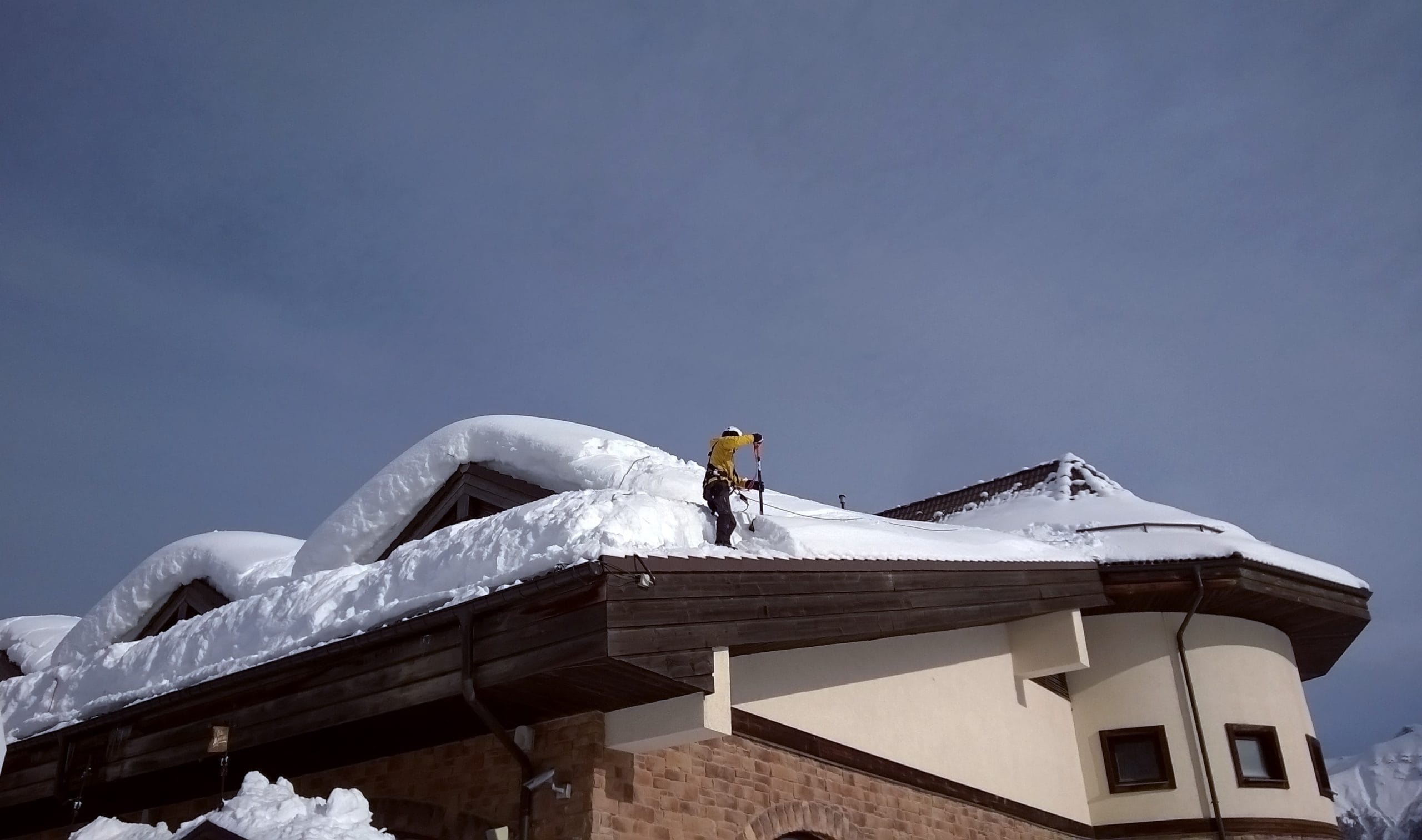
For pitched residential roofs, crews typically work from the edge upward using specialized roof rakes, shovels with non-abrasive blades, and in some cases, controlled snow blowing. The standard approach removes the majority of the snow load while intentionally leaving a thin layer (usually 1 to 2 inches) on the roof surface to protect shingles and membrane materials from tool damage.
Crews assess the roof as they work, noting areas where ice has bonded to the surface, sections where shingles may be damaged, and any signs of structural distress. After clearing, they evaluate the gutters and downspouts to ensure meltwater has a clear drainage path.
Commercial and Flat Roof Snow Removal
Flat and low-slope commercial roofs present unique challenges. Snow accumulates uniformly rather than shedding naturally, and drainage systems can become blocked by ice, causing ponding loads that far exceed the weight of the snow alone.
Commercial removal typically involves larger crews working in coordinated sections to avoid creating unbalanced loads. For buildings with rooftop equipment, HVAC units, and membrane roofing systems, care must be taken to clear around penetrations without damaging seals or flashing.
Equipment and Safety
Professional crews use fall protection systems, harnesses, and roof anchors when working on pitched roofs. In extreme conditions, some removal is performed from aerial lifts or from the ground using extended-reach equipment. Falls from snow-covered roofs are among the most common and most serious winter injuries in WNY.
Flat vs. Pitched Roofs: Different Risks, Different Approaches
Pitched roofs (4:12 slope and steeper) shed some snow naturally through gravity and wind. The steeper the pitch, the less snow accumulates. However, lower-pitched sections, valleys, and areas behind dormers still collect significant loads.
Flat and low-slope roofs (common on commercial buildings, garages, and some residential additions) hold everything that falls on them. Every storm adds to the cumulative load, and without proper drainage, meltwater adds to the total weight rather than running off.
Multi-level homes with a lower flat-roof section face a compounded risk: snow sliding off the upper pitched roof lands on the lower flat section, doubling or tripling the effective load in that area.
Why DIY Roof Snow Removal Is Rarely Worth the Risk
Using a roof rake from the ground to clear the first few feet of a single-story roof edge is generally acceptable. Anything beyond that introduces risks that most homeowners are not equipped to manage safely.
- Falls. A snow-covered roof hides ice patches, damaged shingles, and changes in pitch.
- Structural surprises. Without experience reading structural stress indicators, you may not recognize that the section you are standing on is already under dangerous load.
- Roof damage. Aggressive shoveling tears shingle tabs, cracks flashing, and punctures membrane roofing.
- Unbalanced loading. Removing snow from one section while leaving an adjacent section loaded can create uneven stress on the framing.
For most Buffalo-area homeowners, the calculation is straightforward: professional removal costs a fraction of what roof repairs, interior water damage restoration, or a medical emergency would run.
Why Buffalo-Area Properties Face Greater Snow Load Risk
- Intensity and frequency. Lake-effect bands can stall over the same communities for hours, dropping concentrated snowfall in narrow geographic corridors.
- Heavy, wet snow. Lake-effect snow is often denser and wetter than the fluffy powder associated with clipper systems.
- Back-to-back events. Buffalo frequently experiences multiple significant snowfalls within the same week.
- Aging housing stock. Many homes in Tonawanda, Kenmore, North Tonawanda, and the surrounding suburbs were built before modern snow load requirements were codified.
Frequently Asked Questions About Roof Snow Removal
How much does professional roof snow removal cost?
Pricing depends on the size and pitch of the roof, accessibility, and the depth and type of snow. Residential removal in the Buffalo area typically ranges from a few hundred dollars for a standard single-family home to significantly more for complex or multi-story structures.
Will my roof leak after snow is removed?
Snow removal itself should not cause leaks when performed correctly. Leaving a protective layer of snow on the surface keeps shingles protected while still reducing the load to safe levels.
Should I remove snow after every storm?
Not necessarily. Monitor accumulation and weight rather than responding to every event. It is the cumulative load from multiple storms, heavy wet snow, and rain-on-snow events that triggers the need for removal.
Can I use a roof rake for my entire roof?
Roof rakes are effective for the first 3 to 4 feet of a single-story roof edge. They cannot safely or effectively reach the upper portions of a roof. For full-roof clearing, professional service is the appropriate solution.
Is roof snow removal covered by insurance?
Snow removal itself is generally considered a maintenance expense. However, damage resulting from snow load, including structural collapse or water intrusion, may be covered under your policy.
How quickly can a professional crew respond for emergency roof snow removal?
Most reputable roofing companies in the Buffalo area prioritize emergency snow removal requests and can typically respond within 24 to 48 hours. The best strategy is to contact a provider before accumulation reaches critical levels.
Do Not Wait Until Your Roof Shows Stress
If your roof is carrying heavy snow and you are unsure whether it needs clearing, the safest call is to get a professional assessment. AVA Roofing & Siding provides emergency roof snow removal for residential and commercial properties across the Buffalo and Western New York area.
Contact AVA Roofing & Siding today or schedule a snow removal appointment online before the next lake-effect event hits. Serving Tonawanda, Kenmore, North Tonawanda, Amherst, Williamsville, Cheektowaga, Hamburg, and the greater Buffalo area.